
Basant Panchami Pooja: Complete Description, Significance, Rituals & Benefits
Basant Panchami, also known as Saraswati Pooja, is a sacred Hindu festival dedicated to Maa Saraswati, the goddess of knowledge, wisdom, learning, music, and arts. This auspicious day marks the arrival of spring (Basant Ritu) and is celebrated with devotion across India, especially by students, teachers, artists, and scholars.
What is Basant Panchami?
Basant Panchami falls on the fifth day (Panchami Tithi) of the bright half of the month of Magha (January–February). The festival symbolizes new beginnings, positivity, creativity, and intellectual growth.
The color yellow dominates the celebration, representing energy, prosperity, knowledge, and the blooming mustard fields during spring.
Importance of Basant Panchami Pooja
Basant Panchami Pooja holds deep spiritual and cultural importance:
- Dedicated to Goddess Saraswati, the source of wisdom and creativity
- Considered highly auspicious for education and learning
- Ideal day to start Vidya Arambh (education for children)
- Encourages spiritual clarity, focus, and intellect
- Marks the transition from winter to spring, symbolizing renewal
Students pray for success in studies, while artists seek blessings for creativity and skill.
Mythological Significance
According to Hindu scriptures, Goddess Saraswati emerged on Basant Panchami to bring knowledge and enlightenment to the world. Lord Brahma created her to remove chaos and ignorance. Since then, this day is celebrated as her divine appearance day.
Basant Panchami Pooja Vidhi (Ritual Method)
1. Preparation
- Wake up early and take a bath
- Wear yellow or white clothes
- Clean the pooja area thoroughly
2. Pooja Setup
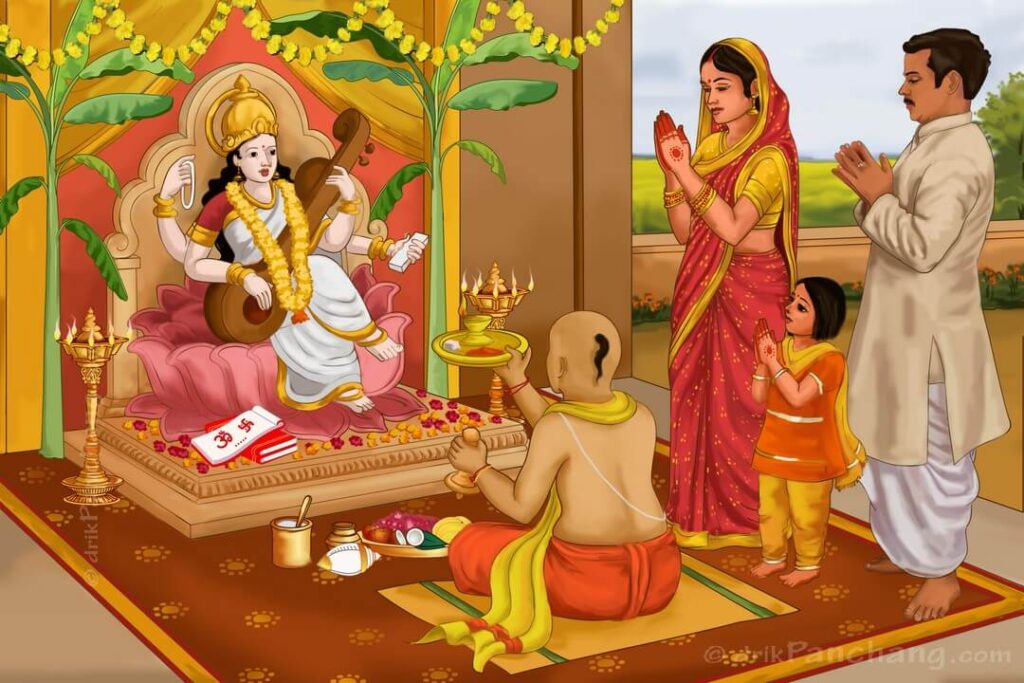
- Place an idol or image of Maa Saraswati on a clean altar
- Decorate with yellow flowers and cloth
- Keep books, musical instruments, pens, and study materials near the deity
3. Pooja Samagri (Required Items)
- Idol or photo of Goddess Saraswati
- Yellow flowers (marigold, mustard)
- Yellow sweets (boondi, kesar halwa, laddu)
- Fruits
- Akshat (rice), roli, incense sticks, diya
- Books and instruments
4. Pooja Procedure
- Light the diya and incense
- Chant Saraswati Mantras
- Offer flowers, fruits, and sweets
- Avoid touching books until pooja is completed
5. Saraswati Mantra
“ॐ ऐं सरस्वत्यै नमः”
Chant this mantra 108 times for wisdom and clarity.
6. Aarti & Prasad
- Perform Saraswati Aarti
- Distribute prasad among family members

Vidya Arambh Sanskar on Basant Panchami
Basant Panchami is considered the best day to begin education for young children. During Vidya Arambh:
- Children write their first letters
- Parents seek blessings for a bright academic future
- It removes obstacles in learning
What to Do on Basant Panchami (Dos)
- Wear yellow clothes
- Offer yellow sweets and flowers
- Start new educational or creative work
- Pray sincerely with focus
What Not to Do (Don’ts)
- Avoid eating non-vegetarian food
- Avoid alcohol and negative thoughts
- Do not touch books before pooja
- Avoid laziness and ignorance
Benefits of Basant Panchami Pooja
- Enhances intelligence and memory
- Improves concentration and creativity
- Brings success in education and arts
- Removes ignorance and confusion
- Invokes peace and positive energy
Celebration Across India
- West Bengal & Odisha: Grand Saraswati Pooja in schools and colleges
- North India: Yellow attire, kites, and prayers
- Rajasthan & Gujarat: Seasonal festivities and cultural programs
Conclusion
Basant Panchami Pooja is not just a religious ritual but a celebration of knowledge, wisdom, and new beginnings. Performing Saraswati Pooja with devotion brings clarity of thought, academic success, and spiritual growth. It is an ideal day to align oneself with learning, creativity, and positivity.
May Maa Saraswati bless you with wisdom, success, and enlightenment.


Leave a Comment