Mundan Sanskar – Significance, Rituals & Modern Applications
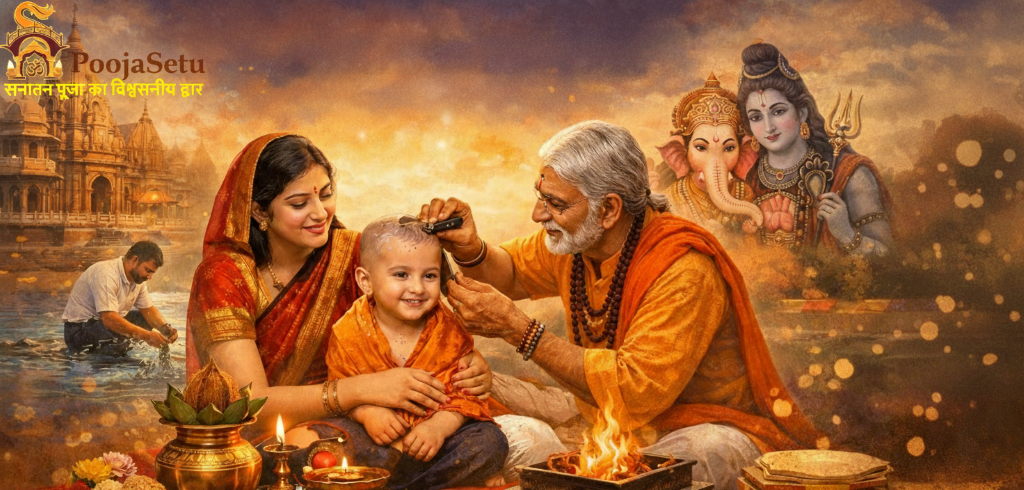
Mundan Sanskar, also known as Chudakarana Sanskar, is one of the 16 essential Sanskars in Hindu Dharma. It is a sacred ritual involving the first hair removal of a child. According to scriptures, a baby’s first hair symbolizes undesirable traits and past life impurities, and thus removing them brings purity, good health, and spiritual development.
Importance of Mundan Sanskar
Mundan Sanskar holds deep spiritual and scientific significance:
Spiritual Significance
- Helps remove negative energies and impurities from past birth.
- Promotes a fresh start in the child’s life.
- Enhances divine blessings, wisdom, and mental growth.
- It is believed to strengthen the bond with family and dharma.
Scientific & Health Benefits
- Improves blood circulation in the scalp.
- Supports better hair growth and thickness.
- Keeps the head cool during early childhood.
- Enhances hygiene and prevents scalp infections.
When is Mundan Performed?
- Usually between 6 months to 3 years of the child’s age.
- Astrologically chosen auspicious day (Shubh Muhurat) based on the child’s Janam Kundli.
- Performed at home, temple, or a holy pilgrimage site like Varanasi, Haridwar, Ujjain, and Prayagraj
Method of Performing Mundan Sanskar
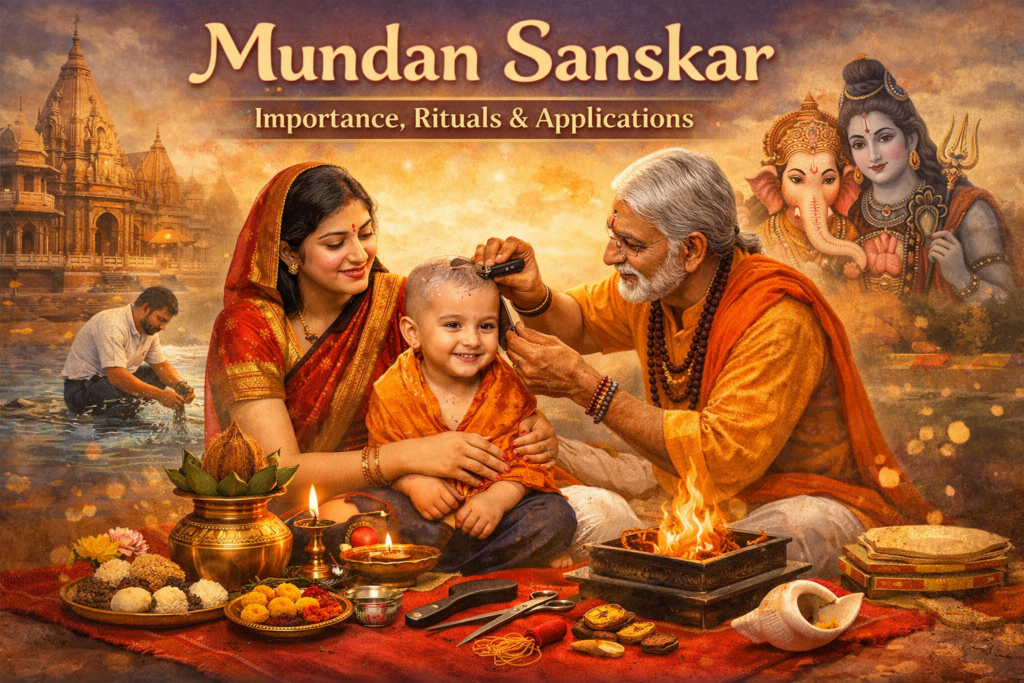
Here is the traditional step-by-step ritual process:
- Sankalp: Pandit ji performs the puja and parents take vows for the ritual.
- Gauri-Ganesh Puja: Seeking blessings from Lord Shiva, Mata Parvati & Lord Ganesha.
- Hawan / Yagya: Offered for wellness, protection, and purity.
- Hair Removal (Mundan Ceremony): Child’s hair is shaved while chanting Vedic mantras.
- Offer Hair to Holy River: A part of the removed hair is immersed in a sacred river as a symbol of purification.
- Aashirvad & Tilak: Pandit ji blesses the child for long life, sharp intellect & prosperity.
Where Can Mundan Sanskar Be Performed?
- Home under the guidance of a Priest.
- Temples and nearby holy places.
- Online + Offline Pooja booking services are also available now.
- Pilgrimage cities: Varanasi, Kashi, Mathura, Haridwar, Rishikesh, Prayagraj.
Items Required (Mundan Samagri List)
- Kalash, Gangajal, Chandan, Kumkum
- Rice, Flowers, Fruits, Sweets
- Havan Samagri, Ghee, Samidha
- Razor/trimmer (sanitized), Scissors
- Red cloth, Thread (Kalawa)
- Coconut, Betel leaves, Coins
For detailed downloadable Samagri list click here
Dos and Don’ts
✔️ Do:
- Select an auspicious date through a Pandit Ji
- Ensure hygiene and use sterilized shaving tools
- Keep the child calm and comfortable
❌ Don’t:
- Perform hair cutting without proper rituals
- Force the child if they are scared or unwell
- Discard hair improperly
Modern Applications
- Helps preserve tradition in modern families
- Online pooja booking creates convenience for busy parents
- Professional barbers & priests ensure safety and Vedic rituals are properly followed
- Option for live-streaming rituals to involve distant relatives
Conclusion
Mundan Sanskar is not just a haircut ritual—it is a sacred tradition that blesses the child with purity, health, and wisdom. Performing this ceremony with devotion ensures the spiritual and cultural growth of the upcoming generation.
Leave a Comment