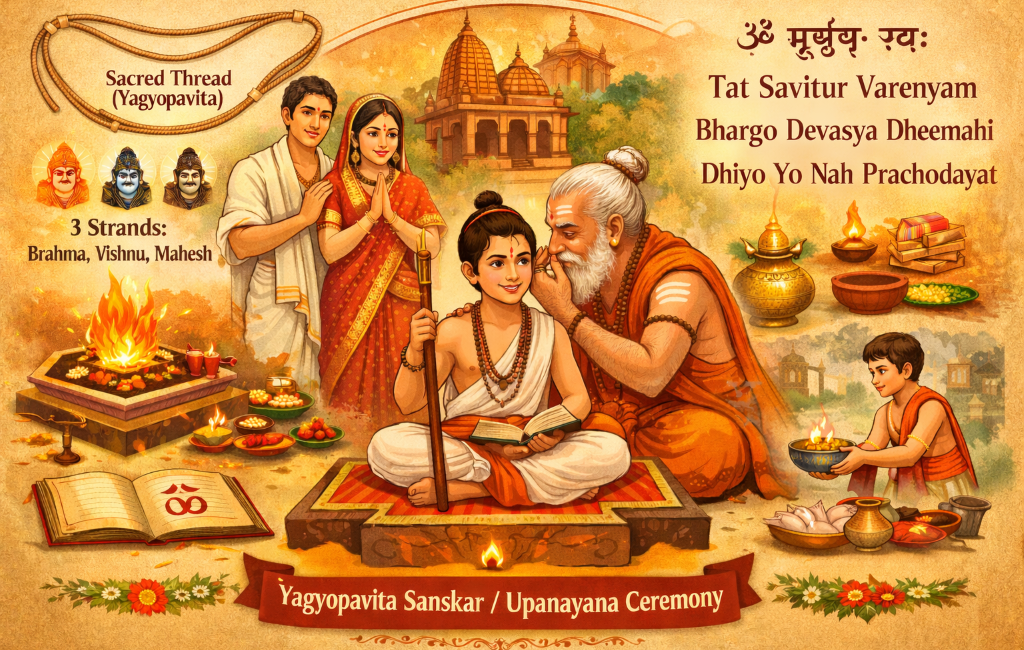
Yagyopavita Sanskar / Upanayana Ceremony – Complete Details
Yagyopavita Sanskar is one of the most important among the 16 Sanskars (rites of passage) in Hinduism. This sanskar is also known as the Upanayana Ceremony. It symbolizes the beginning of student life (Brahmacharya Ashram) and marks the entrance into spiritual, educational, and disciplined living.
After this ceremony, the child is considered “Dvija” (Born again spiritually) and becomes eligible to learn Vedas and chant the Gayatri Mantra.
Importance of Yagyopavita (Sacred Thread)
The sacred thread consists of three strands, each representing:
| Meaning | Symbol |
|---|---|
| Three strands | Brahma, Vishnu, Mahesh |
| Three Gunas | Sattva, Rajas, Tamas |
| Three debts | Debt to Parents, Teachers (Rishis), and Gods |
| Three Worlds | Earth (Bhu), Space (Bhuvah), Heaven (Swah) |
| Three purifications | Mind, Speech, and Actions |
It is worn over the left shoulder and sits across the right side of the torso.
Proper Age for the Ceremony
| Caste (Traditional) | Recommended Age |
|---|---|
| Brahmin | 8 years |
| Kshatriya | 11 years |
| Vaishya | 12 years |
Main Purpose
- Start of Vedic education
- Discipline & self-control
- Cultural and moral development
- Social and spiritual responsibilities
- Initiation into Brahmacharya lifestyle
Main Ritual Procedure of Yagyopavita Sanskar
1. Sankalpa (Oath & Intent)
Parents and priest take the vow for performing the rite.
Name, Gotra, and place are recited.
2. Purification & Setup
Sacred fire (Havan), Kalash setup.
Child is dressed in auspicious clothes.
3. Shikha Tying & Ritual Bath
Hair tuft (Shikha) is tied properly.
Child bathes for physical and emotional purity.
4. Wearing of Sacred Thread
Guru or father places the thread on child’s shoulder.
Sacred mantras are chanted.
5. Gayatri Mantra Initiation
Child receives Gayatri Mantra from the Guru.
Required to recite it daily (preferably 108 times).
6. Mekhala, Danda & Bhiksha
Symbol of discipline & service.
Child begs first food as humility teaching.
7. Havan & Blessings
Fire offerings and prayers.
Ceremony concludes with blessings from elders.
Gayatri Mantra
Om Bhur Bhuvah Swah
Tat Savitur Varenyam
Bhargo Devasya Dheemahi
Dhiyo Yo Nah Prachodayat ॥
Meaning: May the Supreme Divine Light guide and inspire our intellect.
Rules for Wearing the Sacred Thread
- Must be worn during all religious rituals.
- Remove or place behind the neck while sleeping or using the toilet.
- Replace immediately if damaged.
- Keep clean and pure, especially during bathing and prayer.
Benefits of Yagyopavita Sanskar
| Spiritual Benefits | Social & Mental Benefits |
|---|---|
| Right to Vedic learning | Confidence & discipline |
| Divine blessings | Moral and cultural values |
| Purity of mind & soul | Better focus & character building |
Who Can Perform the Ceremony?
In modern times, anyone from any community who believes in Vedic teachings can undergo this Sanskar. It has become a universal spiritual initiation.
Types of Sacred Thread
| Type | Usage |
|---|---|
| One-strand | General rituals |
| Three-strand | Vedic study |
| Five-strand | For Sanyasis or special vows |
| Nine-strand | Major yajnas & pilgrimages |
Upanayana in Modern Times
- Conducted before marriage
- Included with school or Ashram education
- Represents cultural identity and heritage
Conclusion
Yagyopavita or Upanayana Sanskar is the foundation of spiritual education, discipline, and cultural upbringing. It inspires a child to live a meaningful, pure, and responsible life.
Leave a Comment